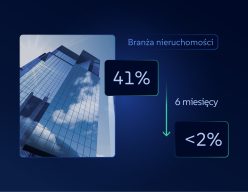
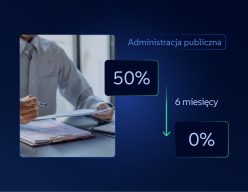
In a food-sector organization with several hundred employees, 42% of employees clicked on a simulated phishing test— a critical warning sign. More than 4 in 10 people could, with a single click, set off a chain of events that exposed the company to account takeovers, data breaches or costly operational downtime.
The organization decided to introduce Practical Anti-Phishing Training built around regular, tailored cyberattack simulations, helping employees recognize today’s threats in the context of their everyday work.
After eight months of training, the phishing click rate had fallen to 5% — strengthening the organization’s cyber resilience and providing hard data for reporting to management and supervisory bodies, as well as planning future learning initiatives. Most importantly, the organization gained greater control over the risks associated with the human factor.
The Challenge
Nearly half of employees could expose the organization to a security incident
The organization had not previously run a security awareness program. It had no recurring initiative to build secure habits and no data showing the scale of the risk or where it was concentrated.
The phishing test made the risk clear. A well-crafted message was enough to set off a chain of events for one in four employees: clicking a link or attachment, account takeover, access to the mailbox and further escalation within the organization.
In practice, this scenario can quickly lead to business email compromise ( BEC) fraud, data leaks, malware spreading and operational downtime. Reputational damage and loss of customer trust can follow too — consequences that may linger long after an incident.
The Key Objective
Reduce the likelihood of an incident through measurable behavior change
Email is an essential work tool, but also the most common entry point for attackers. If more than 4 in 10 people cannot recognize a fake message, then the risk of an incident is no longer hypothetical; it is only a matter of time.

Our priority was to measurably reduce the team’s susceptibility to phishing and reinforce safe habits, so that under time pressure employees could recognize a social-engineering attempt without triggering further escalation.
The Solution
Why did the organization choose not to rely on traditional cybersecurity training?
Traditional cybersecurity training usually delivers theoretical knowledge — in person or online — detached from the context in which threats actually arise: the inbox, time pressure and everyday work. Materials can be too general and fail to reflect the organization, its roles or the scenarios employees are likely to encounter.
There is also a real operational cost. A several-hour course for 600+ people is a logistical challenge and takes time away from work, while knowledge retention can be low. Without regular practice, employees quickly fall back into old habits — and those habits determine whether someone clicks a link, opens an attachment or enters data into a fake form.
The organization needed an approach that would sharpen awareness and build safer habits into everyday work
That is why the organization introduced Practical Anti-Phishing Training — regular, realistic cyberattack simulations delivered where cybercriminals most often strike: email inboxes and SMS messages.
Instead of a one-off cybersecurity course whose lessons quickly fade, the organization chose a steady rhythm of short, practical experiences. Practical Anti-Phishing Training teaches people to recognize attack patterns much as they learn to spot danger while driving — instinctively, before a mistake happens.
When someone does make a mistake, the training does not leave them feeling that failure is irreversible. Shortly afterwards, the employee receives a short nano-lesson explaining why the attack worked, what to look out for next time and how to respond safely. It turns a slip-up into a quick correction of behavior.
The training also included a phishing-report button, allowing alert employees to proactively flag suspicious messages with a single click.
This model takes security from theory into practice and strengthens the organization’s overall defensive capability.
The Results
After eight months of Practical Anti-Phishing Training , the click rate had fallen to 5%. This measurable reduction in risk can be clearly demonstrated to management, auditors and anyone asking whether security awareness efforts are effective.
A click-rate reduction of nearly 40 percentage points in eight months shows that the improvement was not a short-lived response to a campaign, but the result of safe habits taking hold at work.
Employees now work with greater awareness. They read more carefully, check the context, and spot time pressure and unusual requests before clicking. This leaves cybercriminals with far fewer opportunities to enter the organization through a crafted message.
Clicking on a phishing or smishing message is no longer a highly likely trigger for an incident; it is becoming increasingly rare.
Management, the CISO and IT also gained something technology alone cannot provide: peace of mind and confidence that an apparently ordinary email can no longer trigger a crisis in the organization.
How did the organization achieve these results?
Realistic scenarios tailored to the organization
Campaigns used a range of psychological triggers: time pressure, authority, curiosity, seasonality and urgency. This helped employees stay alert not only to standard phishing — such as a request to change a password — but also to messages that are easy to slip into everyday work.
The training included campaigns across five themes:
- HR, benefits and “rewards” — scenarios appealing to emotion and social proof, including recommendations, recognition, benefits, surveys and internal announcements.
- Systems and processes — messages impersonating IT systems and processes, such as alerts, expiring passwords and login verification requests.
- Social media — lures built around reputation and curiosity, including LinkedIn notifications, publication mentions, comments and interactions.
- Seasonal and contextual messages — messages that “fit the calendar” and therefore sound plausible: holidays, tax forms, new products and current topics.
- SMS and alerts — smishing simulations and short alarming messages designed to prompt a quick click with little time to think. This matters because modern attacks rarely use just one channel. A well-designed campaign can move through email, phones and messaging apps — and employees need to recognize the pattern, not just the format.
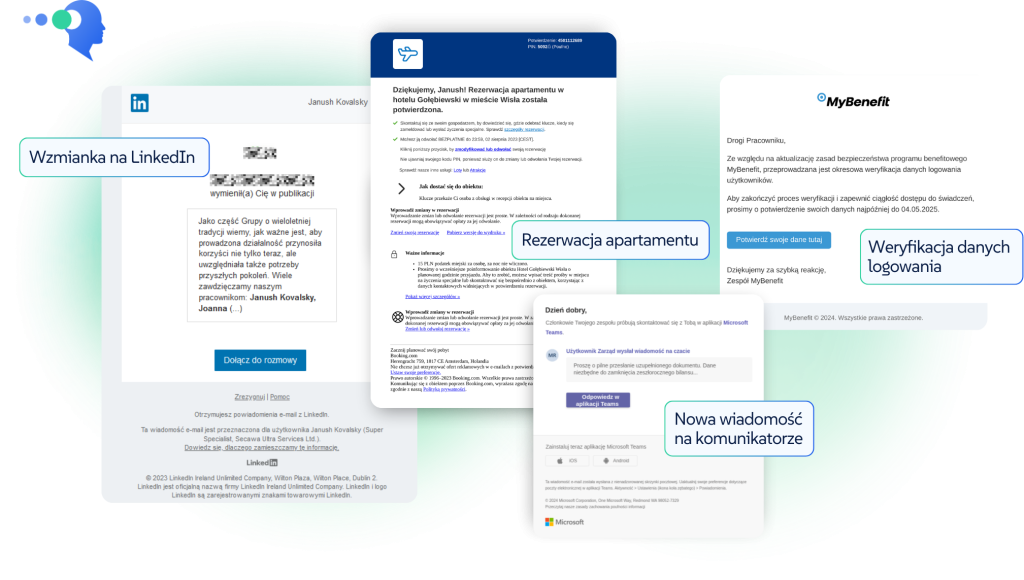
The simulation results showed that the greatest risk did not come from IT alerts, but from messages that felt like part of an ordinary working day. Those scenarios triggered the most mistakes at the start of this organization’s training.
Why?
These messages fit seamlessly into the context of everyday work. They looked like routine correspondence: something “needed now,” a request for a quick response, or a message tied to a familiar process.
In that setting, it is easy to act on autopilot — an attacker’s greatest ally.
This is clearest in HR-related examples: a recruitment recommendation (42%) and a “friendly employee” award (36%). These scenarios worked because they activated classic social-engineering tactics: authority (they sounded official and organizational), time pressure (they implied a quick response was needed) and emotion (an evaluation, recognition or potential reward was at stake).
This is the moment when an employee may click before checking the sender, link or intent of a message — often the first step towards an incident.
Would you like to see how your team would respond to phishing, free of charge and with no obligation?
Ongoing cyber-resilience training instead of one-off security tests
A one-off phishing test can raise awareness, but rarely changes habits. Here, change came from regular campaigns repeated in different variations and contexts until safe responses became second nature.
Campaigns ran three to four times a month, or about one scenario each week. That was frequent enough to reinforce awareness and build reflexes without overwhelming employees.
With this regular practice, employees stopped treating phishing as irrelevant or “easy to spot.” Instead of assuming that threats did not concern them, they began to see how often attacks imitate ordinary workplace communication — and how a rushed, thoughtless response can have disastrous consequences.
In practice, employees learned to recognize recurring social-engineering patterns in real messages: time pressure, unusual requests, emotional manipulation and “urgent” HR or finance topics. The organization gained what a one-off phishing test or cybersecurity course cannot provide: trends over time, comparisons across campaigns and measurable evidence that the risk of a successful social-engineering attack is consistently falling.
Managing risk with hard data, not assumptions
The results of Practical Anti-Phishing Training became a risk map showing not only how susceptible employees were, but also where that susceptibility was concentrated: which topics and social-engineering tactics were most effective, and — most importantly — which employee groups were at greatest risk.
This insight into campaign results changes how security is managed.
The program therefore did not rely on repeating the same templates. Instead, the team SECAWA monitored progress continuously and used the data to adjust the topics and difficulty of future simulations. Where risk was highest, we ran more targeted campaigns. As resilience improved, we raised the bar and prepared employees for more demanding, realistic situations. The training therefore reflected the organization’s actual level of risk.
The client could track progress without manually collecting data or spending time compiling reports. As part of Practical Anti-Phishing Training , we provide detailed, live platform statistics and ready-to-generate reports for inspections or audits — or simply as internal evidence of how effective security awareness activities are.
Summary
A 42% click rate in a phishing test represented a critical risk that could lead to account takeovers, data leaks or costly operational downtime. Introducing Practical Anti-Phishing Training turned that warning sign into a structured, measurable behavior-change program.
After eight months, the click rate had fallen to 5%. This 37-percentage-point reduction is compelling evidence of the organization’s strong resilience to phishing.
The program also revealed what resonated most with employees: scenarios involving HR, benefits and personal topics, as well as reputation and curiosity (recruitment, rewards, LinkedIn, tax forms, holidays and SMS messages). These insights can inform future learning initiatives.
After the program, the organization took another step and introduced a reporting button, allowing employees to flag suspicious messages with one click before phishing can go unnoticed and spread through the company.
Every report strengthens the team’s awareness and builds a culture of proactive response. The company can also recognize attentive employees, encouraging positive behavior and motivating the team to take an active role in protecting the organization.
Tailored cyberattack simulations that build defensive reflexes, measurable training outcomes and audit-ready reports